The smart Trick of 8mm Film Transfers That Nobody is Talking About
16mm movie was utilized for house films for a time, but 8mm movie was more expense effective and thus took control of the marketplace once it was presented. 16mm is still somewhat commonly used as a semi-professional movie format, while it has been changed with modern digital formats for house filmmaking.
This movie is made from 16mm stock but was really less expensive for consumers to buy than 16mm movie. To produce this 8mm movie from 16mm, half of the 16mm would be exposed throughout the shooting process, and customers would turn it around when they reached the end of the film.
These two 25-foot strips would be spliced together to crate a 50-foot 8mm movie reel. The appeal of Super 8 film started in the mid-1960s. With Super 8 film came a half larger frame size, cartridge loading, and noise. If you have Very 8 movie at home, you might see it has smaller gear holes along the edge, which liveinternet.ru/users/tricus8tmr/post463863876// permits the larger frames.
If you are considering 8mm, Super 8, or 16mm film to digital conversion, you have resources right within your reaches to help you. There is no need to feel overwhelmed, since professional business like Current Pixel deal movie to digital conversion services to assist you keep your memories safe from damage and practical to look for generations to come.
Little Known Facts About 8mm Film Transfers.
If you choose, you can also get your movie formats transformed to DVD. At Current Pixel specifically, our skilled staff will make sure you know what film format you have prior to utilizing up-to-date innovation and knowledge to convert your 8mm, Super 8, or 16mm film to digital files and/or DVD.
We just utilize professional broadcast equipment and are able to use services for about 1/2 of what it would cost from a professional lab in NY or LA. If you are trying to find the best quality video or film conversion http://www.bbc.co.uk/search?q=slides to digital at a great cost, you discovered it. We do a wide variety of work from amateur movie and video tape to Federal government archives and Hollywood Independent Movies.
To get more information, see our exclusive Video Transfer Technology. We are the leading 8mm, Super 8, 16mm and 35mm movie transfer and 35mm slide transfer lab worldwide. It is our devices and Breaking News: We are a business continuously looking into and developing new innovations to get more quality from your film and video tape conversions.
It removes 95% of grain and video sound from film and tapes to offer you a clean and sharp video from your old movies. It is a remarkable innovation that has remained in advancement for years. Moving movie film to DVD (and other digital video formats) can be a pricey undertaking.
The 8mm Film Ideas
We can transform Super 8 film, 16mm film 35mm film and 8mm to DVD, Blu Ray and any kind of MOV, AVI or MP 4 file as much as 4K resolution. We can likewise move slides to DVD, JPG and TIFF files, and we transfer video tapes to DVD and AVI files.
Our 16mm, 8mm and Super 8 movie conversion services are offered throughout the United States, Europe, Asia and the Middle East. We are not just understood for our high-end movie conversion services but also for the repair technologies we utilize to make our film conversion services the best in the market.
If for any reason you are disappointed with our results please call us to go over any choices. * Quality of movie conversion and restoration is dependent upon condition of existing movie stock and/or video; significantly deteriorated initial products might be beyond the reach of even the most sophisticated repair methods. To get more information, see our unique Online Video Consumer Index..
My household, like numerous households in the days prior to video electronic cameras, caught snippets of family history four minutes at a time on 8mm reels of film. Being a younger member of a big household, a number of my memories of early household history were formed while viewing the old movies on an old Bell & Howell projector throughout the semi-annual home motion picture nights.


Our 8mm Film Digitalization Statements
Scraping together about twelve dollars for film and establishing, I could make a movie with my bro or with pals. These were mainly unintended productions, figured out after the film had been purchased, the movie packed, and the "talent" assembled. "OK, what should we do now?" was a common concern.
In the summertime of 2010, in my mother's basement I encountered the box consisting of all the family movies. It had been several years considering that I had seen them. Years prior to a number of my brother or sisters had had the movies transferred to VHS, however I had lost the tape. Film transfer technology has gotten better in the intervening years, so I decided then to have them recaptured.
I'm not saying this is the best way; it is simply the method I did it and if you are considering doing something like this yourself, perhaps you can gain from my missteps. This summary is barely thorough. Here is a great write of much of the issues.
I have actually not dealt with it or thought much about it since. I am contacted, a minimum of month-to-month, by someone asking if I will convert movies for them. http://edition.cnn.com/search/?text=slides to digital To head off more of that: sorry, the answer is no, I do not do that; I already have a full-time task and not enough leisure time.
10 Simple Techniques For Digitalization Of 8mm Film
Because I haven't looked at all at this sector in 8 years, I actually have no helpful viewpoint. I'm sorry I can't be more help, however this post already contains all the important things I understood when I was rather approximately date. Intriguing links on the exact same topic: Back in VHS days, one common approach of moving movies to tape was quite simple: the film would be predicted on a screen, and a camera would movie the screen and catch the image in real time.
In fact, one can do this at home. One issue is that the frame rate of films are different than the frame rate of video. For example, routine 8mm film is normally 16 fps, very 8mm movies is usually 18 fps, and video is 30 fps (actually 29.97 if you desire to nitpick).
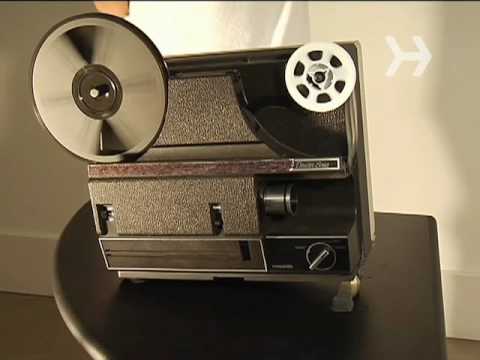
Another problem is that a lot of projectors don't equally light the frame: the center is brighter than the edges, producing a "location" result. If a standard projector is used, the film gate (a piece of metal with a rectangular hole in the center which the movie is forecasted through) will shut out all the image near the edges of each frame, as much as 20% of the image.
There are somewhat better systems committed to the task that can remove some of these problems, however they still experience the problem of unsynchronized frame rate conversion: Nowadays the image is captured to DVD rather of VHS, however there are the exact same basic flaws as in the past. Do not under any circumstance opt for this option, no matter how inexpensive.